Delta Hospitals · Rajahmundry

Procedures & treatment

Kidney, ureter & bladder stone procedures

Laser, endoscopic and percutaneous options for stones in the kidney, ureter and bladder.

This category includes 6 services. The most appropriate option, expected hospital stay and recovery are discussed only after an individual assessment.

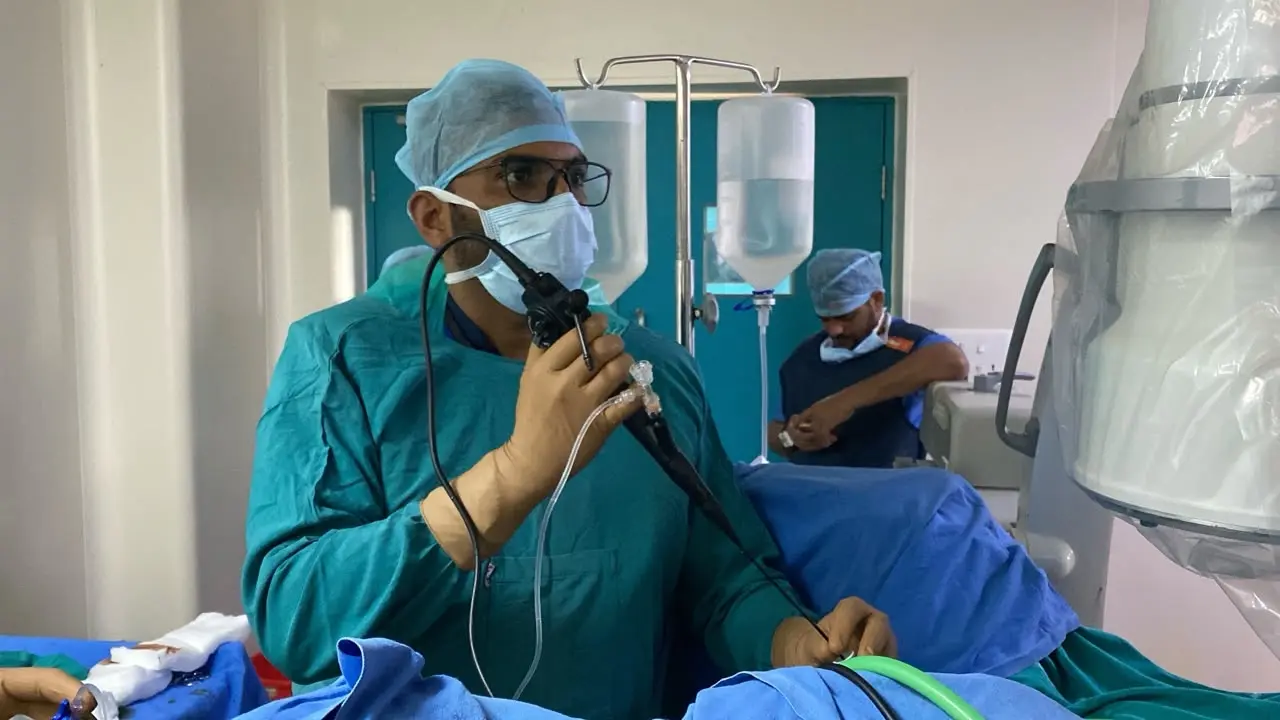
Dr. K. Chandra Yella performing an endoscopic stone procedure in an operating theatre

Treatment directory

Services and Procedures in This Category.

The information below is a general guide. Technique, suitability, timing, hospital stay and recovery can vary according to the diagnosis and individual health needs.

Common focus areas
  • Kidney stones
  • Ureteric stones
  • Bladder stones
  • Recurrent stone disease
01

Retrograde Intrarenal Surgery (RIRS)

Used for: Selected kidney stones, including lower calyceal and recurrent stones

A flexible scope is passed through the natural urinary passage into the kidney. Laser energy is then used to dust the stone.

Technology
Flexible ureteroscope, digital imaging and Holmium or Thulium Fibre Laser
Typical stay
1 day
Typical recovery
1–2 days
02

Ureteroscopy and Laser Lithotripsy (URSL)

Used for: Ureteric stones and small to medium kidney stones

A thin endoscope is passed through the urinary passage without an external incision. The stone is fragmented with laser energy and removed.

Technology
Semi-rigid or flexible ureteroscope with Holmium:YAG or Thulium Fibre Laser
Typical stay
Usually 1 day
Typical recovery
1–2 days
03

Mini Percutaneous Nephrolithotomy (Mini-PCNL)

Used for: Large kidney stones, staghorn calculi and hard stones unsuitable for Retrograde Intrarenal Surgery (RIRS)

A small puncture is made over the kidney so that stones can be fragmented and removed using miniature instruments.

Technology
Mini-PCNL system, nephroscope and laser or pneumatic lithotripsy
Typical stay
2–3 days
Typical recovery
3–7 days
04

Percutaneous Nephrolithotomy (PCNL)

Used for: Very large kidney stones and complex stone disease

Stones are removed through a small tract created directly into the kidney.

Technology
Nephroscope with ultrasonic, pneumatic or laser lithotripsy
Typical stay
2–4 days
Typical recovery
5–7 days
05

Cystolitholapaxy / Cystolithotripsy

Used for: Bladder stones

Bladder stones are fragmented using an endoscope and laser before the pieces are removed.

Technology
Cystoscope and laser lithotripsy
Typical stay
1 day
Typical recovery
1–2 days
06

Open Cystolithotomy

Used for: Large bladder stones not suitable for endoscopic fragmentation or removal

The bladder is opened through a lower abdominal incision so that one or more large stones can be removed intact.

Typical stay
2–3 days
Typical recovery
10–14 days

Clinical media

From Dr. Yella's practice.

Select a card to view the complete original image or video. Sensitive clinical material remains concealed until you choose to open it.

Case gallery

Inside the kidney

Case gallery

Laser treatment comparison

Case gallery

Open cystolithotomy case

Need an individual assessment?

Speak with the hospital team.

CallAppointment